
Discover a new approach to therapeutic music based
on the latest research and most essential insights
Informed by working with hundreds of therapists, this course identified and focusses on key challenges
and knowledge gaps that are present in real-world practices today:
Designed to develop a unique combination of 3 core competencies
At the heart of this course is an integrative model of therapeutic music that unifies cognitive and affective neuroscience, developmental and evolutionary psychology, psychodynamic and humanistic theory, relational and medical approaches, and a variety of philosophy and anthropology perspectives on music, ritual and healing.
The capacity to perceive, express and modify musical qualities in service of a therapeutic practice.
It does not concern the mastery of a musical instrument or the learning of music theory. Neither does it's development depend on these.
Therapists often fear that they lack enough musical skills. You may for example argue that you do not play an instrument, that you do not understand music theory, or more broadly that you do not understand music enough.
The reality is that these are not needed to develop the most primary and fundamental skill for working with music therapeutically.
By developing your therapeutic musicality, this course is designed to abilities to:
You will practice and apply therapeutic musicality across five dimensions:
From day 1 you are guided into new ways of relating with music in an experience-based manner.
Each week you are given a fresh list of experiences you can easily implement by yourself at any point in your day.
You will be engaging with sound recordings, your environment, the voice of yourself and others. All of these are purposefully designed to be short, immersive and fun.
The capacity to modify your ways of responding to the dynamic needs of the present context.
It does not discard models, protocols, guidelines, but teaches how to apply them into the reality of your practice.
Many therapists fall in in the trap of searching for protocols and step-by-step guidelines that can be easily copy-pasted.
For example, you may collect playlists created by others, or follow a set of prescriptions of tracks to use for specific use-cases.
Although models and protocols have a clear value and function, when applied too procedurally this will create an inherent dissociation between therapist, method and client.
What you will learn instead in this course is how to adopt a modular, fluid way of working.
By providing a new dimension of flexibility into your practices, this course is designed to:
n this course you will learn how to apply a number of different models and guidelines, to different therapeutic needs, situations and clients.
You will familiarise yourself with the following:
Distinct intersubjective dynamics & roles that therapists and music can inhabit dynamically.
Via a combination of theoretical models, guided listening experiences and interactive triad-based practices, you will learn how to adapt ways of responding in a variety of contexts. Both to yourself and others.
The ability to hold distinct paths of meaning-making together simultanously and inclusively.
This is not about recognising value in different perspectives, but how they interweave as different expressions of the same phenomena.
Therapists and students of therapies tend to box themselves into one or a small number of modalities and orientations.
While this is an organic outcome of working within limited frameworks and areas of competence, it can narrow one’s effectiveness when responding to phenomena that are, by nature, multifaceted.
Both people and music are inherently complex, layered, and at times ambiguous.
Using music in therapy therefore requires an integrative attitude: an openness to multiple ways of being, listening, interpreting and responding. This is the third foundation for working with music in therapy settings.
This integration allows the therapist to move more fluidly between perspectives (behavioural, medical, psychodynamic, musical, cultural, neuroscientific, somatic, etc) without collapsing into any single framework. Each lens will enrich and open up rather than limit the therapeutic processes.
This course presents multi-displinary perspectives on Music, Self and Therapy
These disciplines will include:
These will be presented through teaching the following integrative frameworks:
This will be teached primarily via video lectures, conversational formats, use-case studies and additional reading suggestions.
This is not a course you study. This is a course that you will embody.
Each week bridges conceptual depth with lived understandings. Whether through self-guided practices or live group
interactions: you’ll use music from day one, and not just study it.

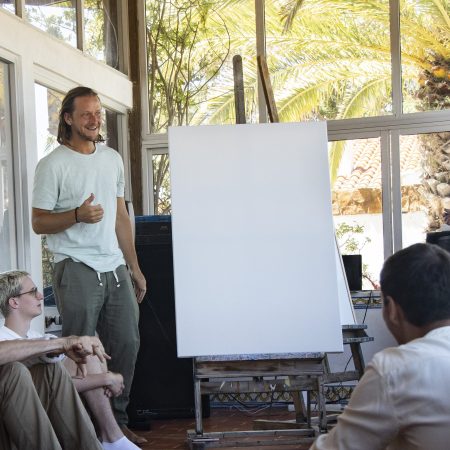

Converging into a 1-month playlist-design workshop in which you
will apply your learnings directly into your ways of working.
Within small groups you´ll experience each others approach. Beyond playlists this practice offers the space to include
methods for interviewing, preparing, guiding, personalising, sequencing, mixing, adapting, etc.
You’ll develop a flexible framework for using music therapeutically and learn how to adapt
this seamlessly to your own setting and way of working.
Although originating from expertise in music for psychedelic therapy, the frameworks offered in this approach are purposely agnostic to and applicable within a range of therapeutic orientations. Therefore this course creates an diverse and collaborative learning collective
Those sharing specific orientations will have numerous opportunities to come together in focussed working-groups, conversations & practices.
PAT • KAP • Individual & group work
PAT • KAP • Individual & group work
Psychotherapists • Psychiatrists • Counsellors • Clinicians
Psychotherapists • Psychiatrists • Counsellors • Clinicians
Bodyworkers • Coaches • Yoga Teachers • Breathworkers
Bodyworkers • Coaches • Yoga Teachers • Breathworkers
"I was first introduced to shakuhachi through Arve Henriksen's music in the early 2000s. When I later witnessed Adrian perform, I was captivated not only by the instrument's incredible tonal colour but also by its deep roots in Zen philosophy. I believe Adrian is one of the rare artists who truly embodies the shakuhachi essence, as a tool for awakening. His multi-instrumental contributions to Wavepaths are authentic and rooted in humanity, yet transcending tradition."
— Mendel Kaelen, Founder of Wavepaths
Composers • Producers • DJs • Audio Engineers
Composers • Producers • DJs • Audio Engineers
"I had the privilege of experiencing Andrea Belfi live before inviting him to join Wavepaths. His blend of drums, percussion, and electronics are innovative, his music immediately captivating. As we explored the role of rhythm and sought out exceptional contemporary percussion artists, Andrea was a natural choice. His experimentations with drones, rhythms, and striking tonal colours result in impressive sonic journeys that are richly layered, energetic, entrancing and cathartic."
— Mendel Kaelen, Founder of Wavepaths
Training directors • Clinics • Collectives • Student Cohorts
Training directors • Clinics • Collectives • Student Cohorts
"When I first heard Andrea’s voice and compositional talent, I had a strong instinct that she would be a valuable collaborator. As I learned more about her strong connection to sound and its therapeutic aspects, that instinct was fully confirmed. Andrea has brought a moving, heart-opening and authentic female voice to Wavepaths, one that ranges from profoundly soothing and reassuring to powerfully cathartic and expressive."
— Mendel Kaelen, Founder of Wavepaths
…
From day 1 you are guided into new ways of relating with music in an experience-based manner.
Each week you are given a fresh list of experiences you can easily implement by yourself at any point in your day.
You will be engaging with sound recordings, your environment, the voice of yourself and others. All of these are purposefully designed to be short, immersive and fun.
From day 1 you are guided into new ways of relating with music in an experience-based manner.
Each week you are given a fresh list of experiences you can easily implement by yourself at any point in your day.
You will be engaging with sound recordings, your environment, the voice of yourself and others. All of these are purposefully designed to be short, immersive and fun.
An integrative perspective on mental health, the development of a self, and the nature of change.
An integrative perspective on music and musicality, its evolutionary and ontological roots and the many dimensions in which it is expressed.
Defining the distinct roles the therapist and the music can play to listeners
Introducing a unifying framework to understand the multitude of experiences music can provide.
Understanding the variables within both music and listener that define 5 distinct functions of music.
From curation, labeling & organisation, to understanding temporal dynamics, and the foundations for effective musical attunement.
How to know your patient, offer the ideal listening relationship, and using music as a tool for preparation and integration.
How to define and optimise the ideal qualities for therapist, the room and the music delivery.
Applying the teaching into practice within rotating working groups,. guided feedback and group reflections.
Summaries and integrations of learnings, with extensive group conversations and Q&A.
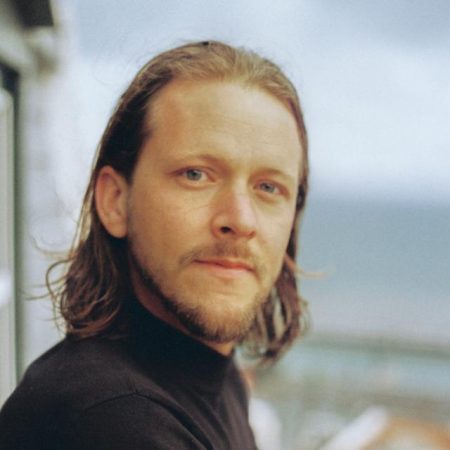
Mendel Kaelen, neuroscientist and founder of Wavepaths, is internationally recognised for pioneering research on the therapeutic power of music.
In this course, Mendel shares the essence of more than 15 years of research and practice.
Mendel completed his PhD in neuroscience at Imperial College London in 2017, specialising in the role of music in psychedelic therapy. He has co-authored more than 50 academic papers and is widely regarded as a thought leader in this emerging field.
He is the founder of Wavepaths, a platform that has supported over 50,000 clinical sessions. Mendel also has an active and diverse music practice for several decades, has guided hundreds of group and individual sessions, and curated therapeutic playlists that reached more than 100,000 listeners worldwide.
Independent | On-Demand
Ideal for those who prefer autonomy and self-paced study, while still developing new foundations in therapeutic music.
Access from January 2026
Live | Interactive | Guided
Ideal for those who value real-time dialogues, personalised feedback and deeper experiential learnings.
Independent | On-demand
Pre-recorded content for those who prefer autonomy and self-paced study, whilst still developing new foundations in therapeutic music.
Access from 15 January 2026
Best for those who value real-time
dialogues, personalised feedback and
deeper experiential learnings via the
playlist workshop and other immersive
practicals.
Absolutely. The course is designed to help you connect with and use the music that uniquely fits you and your musical personality the best.
No. We focus on the therapeutic use of sound, not performance.
Expect ~3–4h/week on average.
Standard headphones/speakers are sufficient; guidance provided.
Designed for therapists, psychedelic practitioners, coaches and wellness professionals.
Certificate of completion provided; CE accreditation is in progress—we’ll update as soon as it’s confirmed
Yes, Wavepaths allows music to be streamed to any device, including laptops and smartphones, making it suitable for both in-person and remote ketamine therapy sessions.
You can start by trying Wavepaths for free. Visit our website to explore our features and see how our music can enhance ketamine therapy practice.
© 2024 All Rights Reserved • Wavepaths